


Table of content
What Is Big Five Personality? Understanding the Five-Factor Model
What is Big Five personality? Explore the 5 traits - openness, conscientiousness, extraversion, agreeableness, and neuroticism - and how they shape behavior.
Table of content
What is Big Five personality? The Big Five Personality model is a widely recognized framework for understanding human behavior. It identifies five core traits - extraversion, agreeableness, openness, conscientiousness, and neuroticism - that shape how we think, feel, and interact. By examining these dimensions, you can gain key insights into your strengths and areas for growth. In this article, we’ll dive deep into each trait, explaining its impact on your life and how understanding them can improve your personal growth.
What Is Big Five Personality?
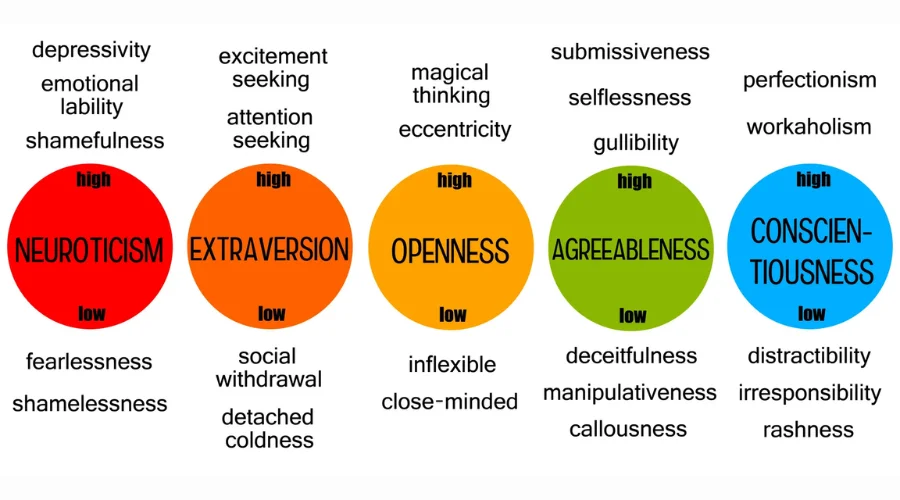
The Big Five Personality model, also known as the five factor model for personality, is a well-known framework for understanding human behavior. It identifies five core dimensions of personality that shape how people think, feel, and behave. These dimensions are extraversion, agreeableness, openness, conscientiousness, and neuroticism.
- Extraversion refers to how outgoing and energetic a person is. Those high in extraversion tend to enjoy socializing, being active, and engaging with others, while those low in this trait often prefer solitude and quiet environments.
- Agreeableness is about how cooperative, kind, and empathetic a person is. People with high agreeableness are typically trusting and helpful, while those who score lower may be more competitive or less inclined to compromise.
- Openness involves a person’s creativity and willingness to embrace new ideas and experiences. People who score high in openness are often curious, imaginative, and eager to explore, while those with lower openness prefer routine and familiarity.
- Conscientiousness measures how organized, reliable, and goal-driven a person is. Highly conscientious individuals tend to be responsible, methodical, and hardworking, while those with lower conscientiousness may be more spontaneous or disorganized.
- Neuroticism reflects emotional stability. Individuals who score high in neuroticism are more likely to experience stress, anxiety, or mood swings, while those with low neuroticism tend to remain calm and emotionally stable under pressure.
Understanding what is the Big Five personality can help you recognize your own strengths and areas for growth. It can also provide insights into how you relate to others, making it easier to navigate personal and professional relationships.
History Of The Big Five Personality Theory
The Big 5 Personality Trait theory is one of the most widely accepted models in psychology, used to explain human behavior. It breaks down personality into five core traits that are recognized across different cultures and research fields. This model has become essential for understanding individual differences and how they impact behavior. So, what is the Big Five Personality? It’s a model that identifies five primary traits, forming the foundation of an individual’s personality and influencing their interactions with the world.
How the Five-Factor Model Was Developed
The Big Five Personality Traits theory evolved over decades of research. Initially, D.W. Fiske (1949) began the journey, followed by Norman (1967), Smith (1967), and Goldberg (1981), who refined the model. Together, they outlined the five key traits: openness, conscientiousness, extraversion, agreeableness, and neuroticism.
These traits were identified through factor analysis, a statistical method that groups behaviors and preferences. This approach enabled psychologists to profile a person based on their responses to these traits. The work of these researchers laid the foundation for the Big Five, creating a reliable framework used worldwide today.
Why the Big Five Gained Global Acceptance
The Big Five Personality Traits gained global acceptance due to their simplicity, reliability, and cultural adaptability. Unlike other models that were either too complex or limited, the Big Five provided a straightforward framework to understand personality. It also helped assess personality traits characteristics in diverse environments, from personal relationships to professional settings.
- Easy to Apply Across Cultures: The Big Five framework is simple and applicable across different cultures, making it a global standard in personality assessment.
- Reliable Predictions: Research supports the ability of the Big Five Personalities to predict behaviors, including conflict resolution and social interactions.
- Focus on Results-Oriented Behavior: Understanding personality types through the Big Five helps assess how people perform and interact in both work and social environments.
In summary, the Big Five Personality Traits provide a clear, comprehensive model for understanding human behavior. Through years of research and continued validation, this model remains a foundational tool in psychology.
The Big Five Personality Traits Explained
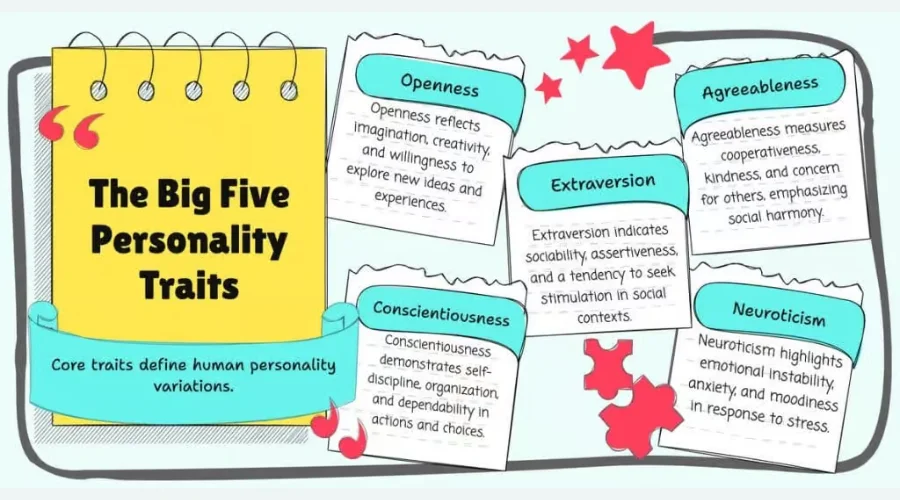
The Big Five Personality Traits provide a comprehensive model for understanding human personality. These five traits serve as fundamental dimensions that shape our behaviors, emotions, and interpersonal relationships. In the following sections, we will explore each of the Big Five Personality Traits, detailing what each trait represents, the characteristics of personality types associated with each, and how they impact day-to-day life.
Openness to experience
Openness to experience refers to the extent to which an individual is open-minded, imaginative, curious, and willing to embrace new ideas and experiences. People who score high on openness tend to have a deep appreciation for art, new concepts, and a broad range of activities. They are often highly creative and tend to enjoy exploring novel ideas and alternative perspectives.
What is Big Five personality in the context of openness? It emphasizes intellectual curiosity and a desire to explore new experiences.
High:
- Highly imaginative and creative, often thinking outside the box
- Enjoys intellectual discussions and exploring abstract concepts
- Open to new experiences and challenges
- Curious about the world and enjoys learning about various cultures, philosophies, and lifestyles
- Willing to experiment with new ideas, practices, and environments
Low:
- Prefer traditional methods and familiar environments
- Less open to new experiences, often resistant to change
- Tend to avoid abstract thinking or speculative discussions
- Be more pragmatic and down-to-earth, focusing on practical matters
- Dislike trying unfamiliar things or stepping outside comfort zones
Conscientiousness
Conscientiousness measures a person's degree of organization, responsibility, and dependability. It reflects how well individuals plan and execute tasks, manage their time, and follow through on commitments. Highly conscientious individuals tend to be reliable, methodical, and disciplined, setting high standards for themselves and their work.
In the behavioural assessment, conscientiousness is a key indicator of a person’s tendency to be results-oriented, focused on achievement, and driven to complete tasks efficiently.
High:
- Be highly organized, structured, and reliable
- Be a strong sense of responsibility and commitment to fulfilling obligations
- Enjoy setting goals and working diligently to achieve them
- Plan ahead and be proactive in completing tasks before deadlines
- Pay attention to detail and strive for accuracy and perfection
Low:
- Be less focused on planning and structure, prefers spontaneity
- May struggle with managing time effectively and meeting deadlines
- Tend to be disorganized, often leaving tasks unfinished
- Prefer to go with the flow rather than following a strict plan
- Can be less concerned with details, sometimes overlooking small but important aspects
Extraversion
Extraversion describes the degree to which an individual seeks stimulation and enjoys social interactions. Extraverts are typically sociable, energetic, and assertive, thriving in social settings and feeling energized by interactions with others.
On the other hand, introverts prefer solitude and find social interactions draining. In characteristics of personality types, those high in extraversion are often seen as outgoing, enthusiastic, and ready to take on challenges in a social context.
High:
- Be sociable, outgoing, and often the life of the party
- Enjoy being in the spotlight and easily makes new friends
- Feel energized and excited by social interactions
- Actively seek new social experiences and enjoy being around people
- Tend to speak and act before thinking, with a high degree of emotional expressiveness
Low:
- Prefer solitude or small, intimate gatherings
- Feel drained after social interactions and need time alone to recharge
- Be more reserved and thoughtful, carefully considering their words before speaking
- Enjoy quiet activities such as reading, writing, or working on solo projects
- Dislike being the center of attention or engaging in small talk
Agreeableness
Agreeableness reflects a person's tendency to be compassionate, cooperative, and considerate of others. Highly agreeable individuals value kindness, empathy, and maintaining harmonious relationships. They are often helpful and enjoy contributing to the well-being of others.
People who score low in agreeableness tend to be more self-centered, competitive, and sometimes skeptical of others' intentions. In the context of an enneagram, agreeable people often align with types that emphasize empathy and collaboration.
High:
- Be empathetic, caring, and understanding towards others
- Enjoy helping others and making a positive impact on their lives
- Tend to be cooperative and collaborative in group settings
- Easily build and maintain positive relationships based on trust and mutual respect
- Prefer to avoid conflicts and works towards resolving differences amicably
Low:
- Be less concerned with others' emotions or well-being
- Be more competitive and focused on personal goals rather than group success
- May have a critical or skeptical outlook towards others
- Tend to prioritize self-interest over collaboration
- Can be argumentative or confrontational in stressful situations
Neuroticism
Neuroticism refers to the tendency to experience negative emotions such as anxiety, sadness, and mood swings. People with high neuroticism may often feel stressed, worry excessively, and struggle to manage their emotions. Those who score low in this trait tend to be emotionally stable, resilient, and more relaxed in the face of challenges.
In the enneagram, neuroticism often correlates with types that experience heightened emotional responses, leading to anxiety or stress.
High:
- Frequently experience stress, anxiety, and negative emotions
- Tend to worry excessively about different aspects of life
- Be easily upset by changes or unexpected events
- Struggle with emotional regulation, leading to mood swings or irritability
- May feel overwhelmed or helpless when faced with difficulties
Low:
- Be emotionally stable and resilient, able to handle stress effectively
- Rarely feel anxious or upset, maintaining a calm demeanor
- Easily bounce back after setbacks, with a positive outlook
- Enjoy a more balanced emotional life, free from frequent mood swings
- Can remain relaxed and composed in challenging situations
Understanding what is Big Five Personality Traits and their impact on behavior can provide valuable insights into how people interact with the world and each other. By identifying where you fall within these traits, you can better understand your natural tendencies and how they influence your decisions and relationships. Whether you're assessing your own personality or seeking a deeper understanding of others, the Big Five Personality Traits provide a solid foundation for personal growth and self-awareness.
Factors Influencing Personality Traits
Personality traits, including the Big Five personality traits, are shaped by both biological and environmental factors. These two aspects work together to influence how we develop and express our traits.

1. Genetic Influences
Genetics play a significant role in determining our personality traits. Studies, such as twin research, show that:
- Extraversion has a heritability of about 53%.
- Openness is highly influenced by genetics, with 61% of the trait being inherited.
- These genetic factors help shape who we are and make us more results-oriented in some areas, like conscientiousness or neuroticism.
2. Environmental Influences
While genetics are important, our environment and experiences also impact our personality traits. These include:
- Parental guidance and the values they instill.
- Social interactions and the culture we are exposed to.
- Life experiences and challenges that can either strengthen or change traits.
These environmental factors help answer what is the primary focus of the Big Five personality traits, as they shape how we express characteristics like agreeableness and neuroticism.
3. Stability Over Time
The Big Five personality traits tend to stay stable as we age. However, there are certain changes over time:
- People often become more conscientious and agreeable.
- Extraversion and neuroticism tend to decrease with age.
Our personality is a combination of genetic and environmental influences. Understanding these factors provides deeper insights into what is Big Five personality and how it shapes our behavior.
How To Use The Big Five Personality Traits In Real Life
The Big Five personality traits are not just for psychologists. These traits can be applied in everyday life to improve self-awareness, career choices, and relationships. By understanding what is Big Five personality, you can enhance communication, build stronger connections, and make more informed decisions.
Self-awareness and Personal Growth
Knowing your Big Five personality traits helps you better understand yourself, which is the first step toward personal growth. Understanding where you fall on each scale can guide you toward actions that improve your well-being. Whether it's managing stress or embracing new opportunities, self-awareness leads to a more fulfilled life.
- Recognize your strengths and weaknesses
- Develop personalized strategies for self-improvement
- Use this knowledge to build better habits
Career Development and Job Fit
Your Big Five personality traits play a crucial role in determining which careers or job roles will best suit your personality. By aligning your natural traits with your professional goals, you can increase job satisfaction and performance.
- High conscientiousness? Consider careers in management or accounting.
- Extraverts might find success in sales, public relations, or team leadership roles.
- High openness often thrives in creative fields like marketing, writing, or design.
Relationships and Communication
In relationships, understanding both your traits and those of others can lead to better communication and fewer misunderstandings. Whether it’s with family, friends, or colleagues, recognizing different personality types can improve how you connect and resolve conflicts.
- Tailor communication to suit your partner’s personality
- Be mindful of introversion vs. extraversion in social settings
- Appreciate the value of empathy and cooperation with high agreeableness individuals
By applying the Big Five personality traits to real life, you can create a roadmap for personal success, job satisfaction, and healthier relationships.

Limitations Of The Big Five Personality Model
While the Big Five Personality model is widely respected, it’s important to recognize that it has some limitations. Despite its broad applicability, these limitations suggest areas where the model may fall short in fully capturing the complexities of individual personality traits. Below are some key drawbacks to keep in mind:
- Broad Traits: While the Big Five Personality model is widely respected, critics argue that it focuses on broad personality traits, which may overlook the finer nuances of an individual’s behavior. This generalization might miss specific, unique aspects of personality that don’t fit neatly within the five categories.
- Lack of Explanation for Trait Development: The model does not directly explain why these traits develop in the first place. It doesn’t address the influence of genetics, upbringing, or life experiences on the formation of personality, leaving gaps that need further research.
- Cultural Limitations: Although the Big Five are generally consistent across cultures, some critics argue that cultural differences can affect the way these traits manifest. This means the model may not fully capture how personality traits work in all cultural contexts.
- Limited Scope: The Big Five Personality model doesn’t account for all aspects of personality. There are other factors, such as emotional states or situational influences, which might play a role in shaping behavior that the model doesn't address.
- Over-Simplification: By classifying personality into five broad categories, the model may oversimplify the complexities of human behavior. This simplification can make it harder to fully understand the depth and variety of individual personalities.
These limitations highlight the fact that while the Big Five Personality model is a valuable tool, it’s not a one-size-fits-all solution for understanding the intricacies of human personality. Future research into this model could help clarify these gaps and offer a more detailed view of what is Big Five Personality and how it functions.
Big Five Personality Vs Other Personality Tests
Understanding personality can be approached in different ways. The Big Five Personality model is often compared to other tests, such as DISC and MBTI. These models offer unique insights into personality, behavior, and how individuals interact with the world around them. Let’s take a closer look at how the Big Five stands against these two popular frameworks.
Big Five vs DISC
The Big Five Personality model and DISC both assess personality, but in different ways:
- Big Five focuses on core traits like openness, conscientiousness, extraversion, agreeableness, and neuroticism.
- DISC looks at behavioral responses with dimensions such as dominance, influence, steadiness, and conscientiousness.
The key difference lies in the approach: Big Five explores internal traits, while DISC test emphasizes how people act in different environments.
Big Five vs MBTI
The Big Five and MBTI also differ in their structure and approach:
- Big Five measures personality dimensions on a spectrum, allowing flexibility in traits like extraversion or agreeableness.
- MBTI categorizes individuals into 16 fixed personality types based on preferences like introversion vs extraversion.
While MBTI offers a clear-cut type, the Big Five offers a dynamic model that reflects changes in personality over time. This flexibility makes Big Five a more adaptable approach to personality assessment.
Conclusion
In conclusion, understanding what is Big Five Personality provides a clear and reliable framework to explore the complexity of human behavior. By delving into the five core traits, you gain insights into how they influence your actions, thoughts, and interactions. Whether you're looking to improve self-awareness, enhance relationships, or make informed career choices, the Big Five offers a practical tool for personal growth and success.
FAQs
Is the Big Five personality test accurate?
Yes, the Big Five personality test is highly accurate and widely used in psychology. It is based on years of research and provides reliable results by measuring core personality traits on a spectrum, making it a trusted tool for understanding individual differences.
Can personality traits change over time?
Yes, personality traits can evolve over time due to life experiences, personal growth, and external factors. While core traits like extraversion or conscientiousness remain relatively stable, they can shift in response to significant life events or conscious efforts to change behaviors.
Is the Big Five better than MBTI or DISC?
The Big Five offers a more flexible and scientifically supported approach compared to MBTI and DISC. Unlike MBTI, which categorizes people into fixed types, Big Five measures traits on a spectrum, making it more adaptable and reflective of personal growth and change.
Can I take a free Big Five personality test online?
Yes, many websites offer free Big Five personality tests online. While they may not be as comprehensive as professional assessments, they can still provide valuable insights into your personality traits and how you score across the five major dimensions.


Don't Let Your Potential Stay Hidden!
Take the DISC test today and discover your unique 'YOU', with deep insights into your true personality and potential.

 Understand yourself
 Choose the right career
 Suggest effective communication
 Reduce negative emotions
Represents your instinctive behaviors and desires.
Shows the behavioral tendencies you think you should exhibit in specific situations.
Related articles
You may also be interested in
 DISCMar 20, 2026
What Is the Average IQ? What Does It Really Mean for Intelligence
Learn what the average IQ is and how IQ scores are measured. Discover global IQ averages and what your score may reveal about intelligence and potential.
 DISCMar 20, 2026
What Are DISC Behavioral Style Blends? How They Shape Personality
Learn what DISC behavioral style blends are and how combinations of DISC styles shape personality. Discover how these blends influence the workplace.
 DISCMar 13, 2026
8 Best DISC Test Online to Understand Your Personality
Discover the 8 best DISC test online to understand your personality type. Learn how to choose the DISC test for self-awareness and career growth.