


Table of content
15 Daily Signs of High Intelligence You Might Have
Discover 15 daily signs of high intelligence, from pattern recognition and curiosity to metacognition, creativity, adaptability, and more.
High intelligence often slips past notice.
Don't judge intelligence by a test score or a quick reply; look for signs of high intelligence in everyday behavior. Watch how someone spots details, challenges assumptions, follows curiosity, and links ideas that seem unrelated.
These patterns can shape how people learn, spend time alone, explain difficult subjects, and handle uncertainty. Individuals with high IQ may show them in quiet, everyday ways, and those signs may appear without quick math skills or solving puzzles at lightning speed.
Cognitive Signs of High Intelligence
Intelligence has more than one measure, so psychologists don't treat a single score as the whole picture. They frame it as learning from experience and then managing one’s relationship with an environment.
You’ve likely heard of IQ, or intelligence quotient, tests. They gauge reasoning, memory, and problem-solving aptitude, but rankings of the smartest countries in the world can also reflect cultural bias, and IQ tests still leave out wider abilities such as creativity and emotional skills.
Genius refers to unusual intellectual or creative power, and psychologists first tried to define it with IQ in the early 1900s.
Around 140 became the earliest benchmark for genius, a level estimated in one of every 250 people. During the 1940s, a leading researcher argued for an IQ over 180, which would occur in roughly one in every 2 million people. This threshold helps explain what is considered a high IQ, with the benchmark around 140, too.
Genius has no single agreed definition. Doctors often assess gifted children by looking at originality and creativity, along with how well they imagine or think across new ways and areas.
Cross-Domain Pattern Recognition
Patterns others miss
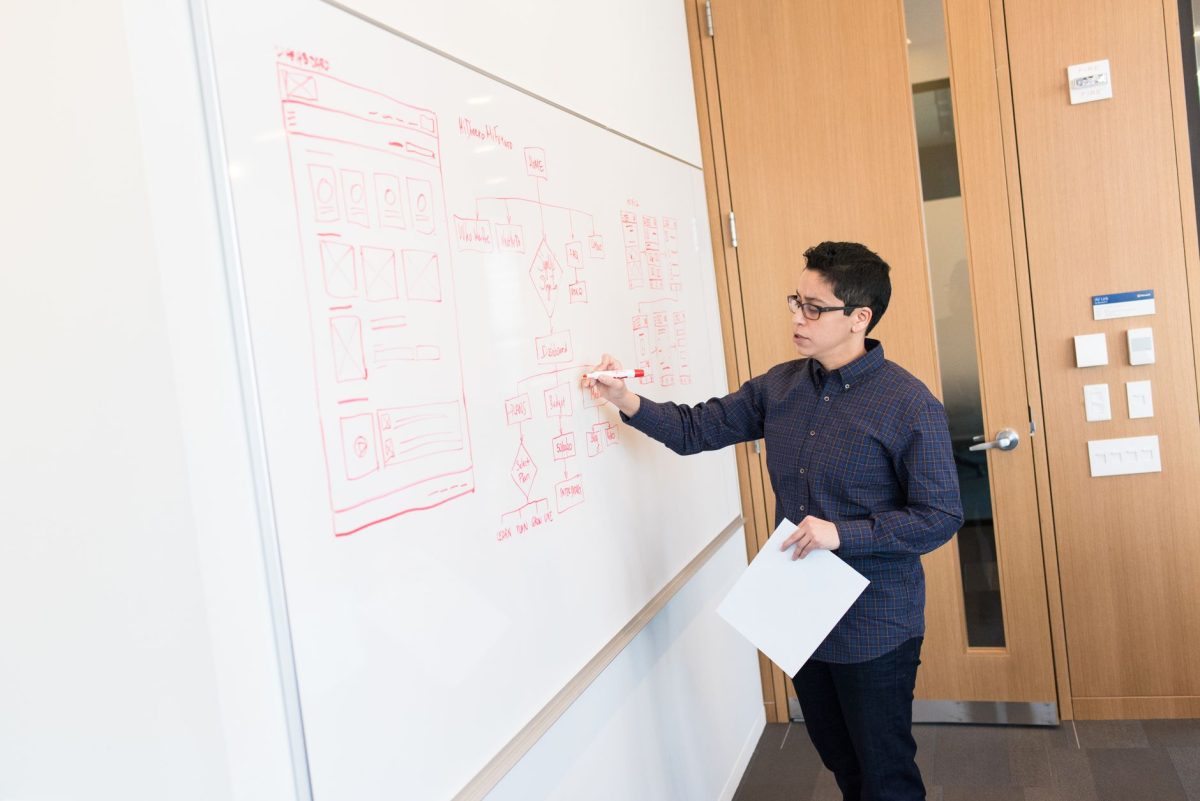
Cross-field pattern recognition can reveal small changes in behavior and links between history and modern life. A chat about cricket might lead into probability and historical or psychological questions because the mind connects ideas like a web.
Those links can shape personal decisions. I noticed my parents’ unhappiness after an arranged marriage without compatibility, followed by their raising three children with limited money, appearing again across families in my society. I chose marriage by choice and remained childfree.
Existential awareness
People expect teenagers to be angsty, which helps explain the familiar brooding 15, year-old in films. They’re less ready for 6-year-olds facing an existential crisis that sounds suited to a 40-year-old.
Systems within ordinary objects
Someone gifted may look at a lamppost and see an entire system, tracing its materials from manufacturing through installation and onward into the power grid and city around it. You may also ask where you fit inside that larger system.
Understanding how parts connect can serve you better than memorizing a list.
Comfort With Ambiguity
Curiosity may appear in how someone follows other people’s lives while remaining open to questioning their own beliefs. Together, these traits fall under openness to experience, one of the Big Five personality traits.
In 2016, researchers tracked 5,672 people from birth to age 50 and found that higher IQ scores at age 11 tended to relate to more openness to experience at age 50.
A situation may look less like a black-and-white photograph and more like a complete image filled with shades of gray. Keep several possibilities open instead of pressing for an instant answer.
Intelligence also includes adaptability, meaning the ability to adjust when situations or events change.
Rapid Learning With Selective Memory
Signs of high IQ can include rapid learning despite selective memory. You may forget ordinary facts while taking in knowledge quickly once interest takes hold.
Working memory allows you to hold specific information while using it, and a 2010 study found a strong relationship between working memory and fluid intelligence.
A strong appetite for knowledge may lead people with high IQs to read widely, including to find better ways to move through life.
I’ve met plenty of intelligent people, but one person stood above the rest and seemed on the level of Einstein. He retained what he learned and could recite books word for word, yet he still forgot meeting times.
Metacognition and Assumption Checking

Smart people watch for any part of their intelligence or history, including a smart-person identity, getting in the way of future progress. Past failure does not guarantee that the same failure will happen again, and past success does not guarantee that the same choice remains best. Check the assumptions they may question:
- Past failure: You may think, “I tried this before and it failed, so it will fail now.” Then check whether the situations are actually identical before carrying that expectation forward.
- Past success: You may decide, “This worked before, so I should repeat it,” and then notice that conclusion is still an assumption.
- A coworker’s method: When working with a coworker or AI tool, you might assume your method is better and expect them to improve by copying it.
- A higher-level check: Ask whether that belief could be wrong, then test the other person’s method before deciding it will fail.
- An instinctive expectation: Notice when you are imposing an X expectation on a situation, and ask how to override it if your instinct is wrong.
- Review and iteration: A creative person reviews completed work and considers what comes next, looking for ways to improve. You might taste a dish and plan to add lime next time, or realize you could have excited Sally by framing an idea differently.
- Self-doubt: Smart people may doubt themselves more than others do, and questioning their logic helps keep it sharp.
- Impostor Syndrome: Even people with the highest IQ scores experience Impostor Syndrome, fearing they are less capable than others believe and may be exposed. That doubt can reflect awareness of how much they do not know, while less self-aware people often overestimate themselves.
- Being corrected: Intelligent people do not have to become salty when someone proves them wrong; they may welcome information that exposes a hole in their logic.
- Teachability: Staying flexible when new information appears is a sign of intelligence.
Continuous Mental Simulation
Between detail and framework
Smart people can shift from microscopic detail to macroscopic frameworks, moving between technical specifics, practical concerns, philosophical ideas, and broad questions.
They can spend one moment handling low-level details in the weeds, then move into the clouds to consider a wider framework.
A mind that keeps working
Rest doesn't always stop the mind from reflecting and analyzing simulations of “what could be.” People with intellectual creativity often have minds that stay busy.
Cognitive excitement
Ideas, tools, projects, and people can spark cognitive excitement, especially when each one brings something new to explore or try.
Returning to puzzles
After an interview, you may sense that someone is smart without knowing the reason, or find an idea compelling before you can explain what drew you to it.
Give your mind room to wander, and those puzzles may come back in the shower, while you’re waiting, driving, or using another quiet moment. Your brain keeps trying to make sense of them.

Subtle Signs of Intelligence in How You Explain Ideas
Clear explanations often show genuine understanding. Denzel [Washington] says in Philadelphia, “Explain it to me like I’m a 2-year-old.” The request is to simplify a complex idea, not to treat the listener as unintelligent.
A strong analogy gives you something to test, both where it fits and where it breaks down. Other people’s deep thinking or problem-solving can give you useful material to examine.
Research suggests language helps people link concepts, so talking to yourself may help you work through ideas. That habit alone still doesn't prove intelligence.
A 2018 study had participants complete a task after encountering instructions in spoken, silent-reading, or audiovisual form. The excerpt doesn't state the result.
Open-Minded Experimentation
Creativity doesn't remain private thought; creative people think through ideas, put them into motion, and explore ways to improve your IQ.
Experimentation starts when you plant a few seeds and see what grows, rather than waiting for perfect control or predictability before beginning.
- Experiment rather than only letting ideas remain in your head.
- Sow a few seeds and see what grows.
- Keep expectations from getting in the way too much.
- Do not require perfect control or predictability before trying.
Research in the European Journal of Social Psychology suggests that people with higher cognitive abilities are more likely to resist unjust authority, which points toward autonomy and critical thinking.
Habits of Highly Intelligent People
Daily routines show how someone manages attention and stimulation while making room for ideas. No single habit proves genius, but several together may suggest broad thinking and adaptive problem-solving.
Solitude Preference
Time inside your own head
According to a 2016 study, people with greater intelligence may derive less satisfaction from additional time with friends, even as friendship, population density, intelligence, and happiness are linked. That does not necessarily mean they dislike people.
Both introversion and intelligence can involve spending time in your own head, reflecting on problems and past experiences while generating ideas. That time supports private thinking.
Space for personal interests
Time with other people can reduce the hours available for reflection and personal interests, including individual projects, although close relationships still matter. Protect enough time for yourself, and solitude remains part of the pattern.
People with high IQs tend to want time alone rather than feel afraid of it, because constant talk and other people’s energy can leave them drained. A small amount of social contact may feel satisfying.
The British Journal of Psychology reported that highly intelligent people often engage in fewer social interactions and can be content with solitude or a small social circle.
Night Owl Sleep Patterns
Late hours may bring a night owl stronger focus and more creative thought than early mornings.
Some people simply think better late than early, which is one of many surprising facts about IQ.

Workstation Disorganization
Messy Desks, Clutter can help unconventional thinkers notice more possibilities and form fresh connections.
A cluttered workspace may go with this thinking style.
A chaotic desk does not create or prove genius by itself. Disorganization connects with creative intelligence when it reflects an active, nonlinear project rather than ongoing neglect; chronic neglect is excluded.
No single habit guarantees genius. Together, these patterns may point to broader thought, stronger pattern recognition, and adaptive problem-solving.
Self-Directed Speech
Self-talk helps arrange thoughts, rehearse ideas, and handle complicated tasks.
When you’re upset, talk to your pet. Explaining your frustration to an animal that listens can help you process pain and distress, which may improve your mood.
Appreciation for Dark Humor
Studies connect dark-humor appreciation with higher intelligence in 2017, while 2011 research connects humor with creativity and intelligence.
Higher intelligence has also been associated with enjoying satire, irony, and dark humor. Sarcasm calls for quick shifts in thought and perspective-taking.
Understanding morbid satire and grotesque wit calls for verbal intelligence, abstract pattern handling, and low emotional reactivity.
Motor Restlessness and Intentional Daydreaming
Small movements and repeatedly bringing your attention back can support focus, recall, insight, and reasoning.
- Doodling: Minor sketches can help stabilize attention and improve recall.
- Fidgeting: Small movements may stabilize attention and improve recall.
- Mind Wandering That Returns: Intentional daydreaming can produce insight and problem-solving when your mind returns to the task.
Characteristics of Intelligent People in Daily Life
Cognitive Empathy
In ordinary interactions, emotional intelligence shows up in empathy, especially in how someone picks up and understands another person's perspective.
- Sensing distress: High empathy helps you notice when people struggle through small changes in body language or behavior.
- Reading body language: Physical signals can give you the first clue that conflict is developing.
- Using those signals: Use what you notice to ask questions and listen empathically until you understand the full story from both sides.
- Considering perspectives: Encourage the people involved to consider perspectives beyond their own.
- Planning solutions: Strong interpersonal skills support intelligence and help you plan possible solutions to a problem.
Social Code-Switching
People who can code-switch effortlessly without instruction.
People who can move easily among groups adjust their manner for your parents and grandparents, a formal work gala, or an evening with friends. They talk naturally with each group and fit the setting they have entered without much friction.
Signs you are intelligent include explaining a complex subject simply.
It matters to recognize your own intelligence when the moment calls for it, rather than hide from the subject, because you sometimes have to address it tactfully.
Argument Conservation
Use your energy when a conversation is genuinely testing what is true; when it turns into an ego contest, protect your attention and leave.

Closed-minded people:
When someone is closed-minded, an intelligent person listens, may nod, and then ends the exchange politely, without resentment or another round of arguing.
Hold back until you understand what's going on, then offer your view so you don't accidentally hurt another person.
Receptive Listening
Listeners
A lot of highly intelligent people listen, though that doesn't describe everyone. They don't need constant attention; when they do speak, you should pay attention.
No bragging
Intelligent people don't brag about being intelligent, since boasting doesn't make them more successful.
Meaningful, layered conversations
They'd rather have meaningful, layered conversations than endless chatter. Philosophy, history, psychology, art, and life's deeper questions keep them pursuing fresh ideas, perspectives, and experiences.
Interpersonal Disillusionment
Low self-esteem
Every genius I've known shared a strange trait: they tended to have low self-esteem.
Seeing through empty words
One told me it may be because they can see past empty words. They spot the real motives driving what people say and do.
Assessing motivation
Imagine correctly judging the motive behind every kind word directed at you, including kindness, dissembling, and efforts to spare your feelings. That offers little protection from motives that can leave you disheartened.
High Intelligence Traits That Cause Mental Strain
Premature Existential Crises
When other people’s motives stay partly hidden, give meaning deliberate attention. A sound place to begin is Man’s Search for Meaning by Viktor Frankl.
Look at the meaning you draw from relationships, the way you use your time, and what you enjoy or feel called to pursue; those are three places to look.
Effort Cultivation Deficits
If you’re so smart, why aren’t work and school easy all of the time?
Relying on intuition at school or work can leave you unable to keep trying once intelligence stops doing the heavy lifting.
Some gifted teens and adults arrive at high school, college, or the workplace without ever developing the ability to keep trying, and few people name the gap.
When ideas come easily at first, early learning may feel effortless, so you get less discipline practice before intelligence alone stops fixing problems.
Choose a low-stakes pursuit that resists easy progress, and give a significant portion of your week to practicing it. Also, find something that does not affect your grades or work.
For many people, that might involve learning a new language, playing a musical instrument, or practicing martial arts, joining team sports, or exploring visual arts.
Every new ability takes time, and persistence has to be built in the same way.
Impostor Phenomenon
Self-doubt
Highly intelligent people may doubt themselves because challenging their own reasoning helps keep it sharp. Questioning your own logic can be part of that process.
Impostor Syndrome
Many highly intelligent people experience Impostor Syndrome.
Threat Anticipation Rumination
Anxiety can devote a great deal of attention to threats that probably won’t happen. Research from 2015 connects verbal intelligence with worry and rumination.

Whether people with high IQs worry extensively or barely at all may depend on how much they trust their ability to meet challenges versus their need to prepare for every possibility.
- Less worry about unlikely events: Highly intelligent people may spend little time stressing about events they know are unlikely to happen.
- Confidence in handling challenges: They may feel more secure about their ability to deal with challenges when they arise.
- Worrying less: That confidence may lead them to worry less.
- Preparing for threats: Extensive knowledge of possible threats may make highly intelligent people worry more because they want to prepare for every possibility.
- Making plans: This worry may involve brainstorming ways to handle the situation or avoid trouble.
People often treat anxiety as harmful, but it can also help them spot danger and respond.
Institutional Friction
Rules and authority
Rules, unexamined traditions, and authority arranged in a hierarchy may feel restrictive to exceptionally intelligent individuals.
Advice from others
Bosses, teachers, family members, and friends may give generous advice when you’re struggling. Following it still doesn’t ensure the obstacle will move.
Fit at work or school
People often discuss fit at work or school when explaining where they belong and where they don’t.
Working with a less-than-ideal fit
Learn sooner rather than later how to work well with people or organizations that are a less-than-ideal fit, because the skill can matter greatly.
A good fit can help, but you also have to learn to work with people who differ from you. For people whose minds are statistical outliers, learning that early can reduce years of discomfort.
Neurobiology and Measurement
Inherited traits probably play a part in intelligence, shaping how a child performs at school and on tests of intellectual ability. A 2016 research review reported that autism can be associated with intelligence exceeding what standardized IQ tests suggest. Strong analytical skills may hide executive-function challenges, making them easy to miss. Assess Giftedness or genius with a standardized intellectual test, and observe how the child interacts in a classroom. Use that wider picture to guide parents and teachers in supporting the child, rather than treating one standardized score as the answer.

Frequently Asked Questions
Is talking to yourself a sign of intelligence?
Talking to yourself may signal intelligence when you use self-talk to sort through thoughts, practice ideas, and handle complex tasks.
Is cursing a sign of intelligence?
Selective profanity can point to a broad vocabulary and verbal fluency. The study found no difference between people who use profanity and generate taboo words and those who do not, indicating that the former group was no less fluent or conscientious.
How to know if you are smart in different ways?
To benchmark your analytical abilities alongside diverse intelligences, take a free IQ test and search online for various options, including one based on Howard Gardner's work.
- Try a quiz: Take a quiz if you want to find out which kind of intelligence is strongest for you.
- Look online: Find various quizzes online, including one based on the work of Howard Gardner.
Key Takeaways
Book smarts
Book knowledge captures only one slice of intelligence; specialists see the idea as far broader, with many valid ways to understand and describe it.
Elementary days
An elementary-school gifted label, on its own, tells you nothing definite about how intelligent you are.
Every brain
Every brain and person differs, so genius can't be reduced to one standard measure.
Intellectual creativity
Intellectual creativity is a powerful form of intelligence, and you may carry it without noticing it for what it is.
Full potential
Intellectual talents reach their full potential only when someone recognizes and nurtures them.
Our talents
If you don't recognize your talents, you probably won't take full responsibility for nurturing and developing them as fully as you could.
Busy mind
A busy mind may feel like an intellectual burden, yet seeing what that burden is worth can make it easier to carry.
Judge intelligence by the pattern across how a person learns, reasons, experiments, communicates, and adapts, rather than looking for isolated signs of high intelligence. Book smarts, early gifted labels, genius, and creative thought can each point you toward something, but none answers the whole question alone. Check for repeated signs in habits, relationships, strain, and biology, and see whether those talents get recognition and nurturing. This leaves room for different brains, different strengths, and a restless mind that won't fit a single standardized measure.


Don't Let Your Potential Stay Hidden!
Take the DISC test today and discover your unique 'YOU', with deep insights into your true personality and potential.
 Understand yourself
 Choose the right career
 Suggest effective communication
 Reduce negative emotions
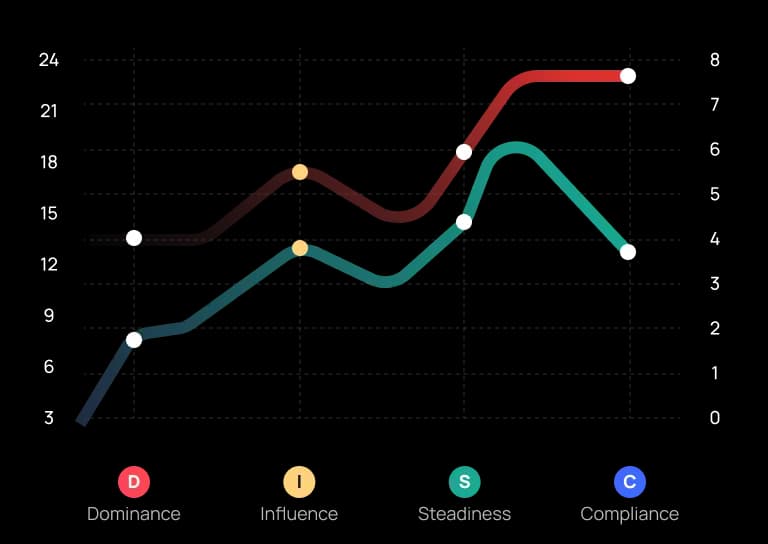
Represents your instinctive behaviors and desires.
Shows the behavioral tendencies you think you should exhibit in specific situations.
Related articles
You may also be interested in
 IQ, EQSep 25, 2026
Why Emotional Intelligence in the Workplace Matters for Leaders
Emotional intelligence in the workplace helps leaders handle difficult conversations, organizational change, employee concerns, collaboration, and conflict.
 IQ, EQSep 22, 2026
Emotional Intelligence and Conflict Resolution: A Practical Guide
Learn how emotional intelligence supports conflict resolution through self-regulation, active listening, empathy, and clear communication.
 IQ, EQSep 22, 2026
What Is a Low IQ Score? Meaning, Ranges, and What It Indicates
Learn what a low IQ score means, where different IQ ranges fall, and why IQ alone cannot determine intelligence, ability, or everyday functioning.
